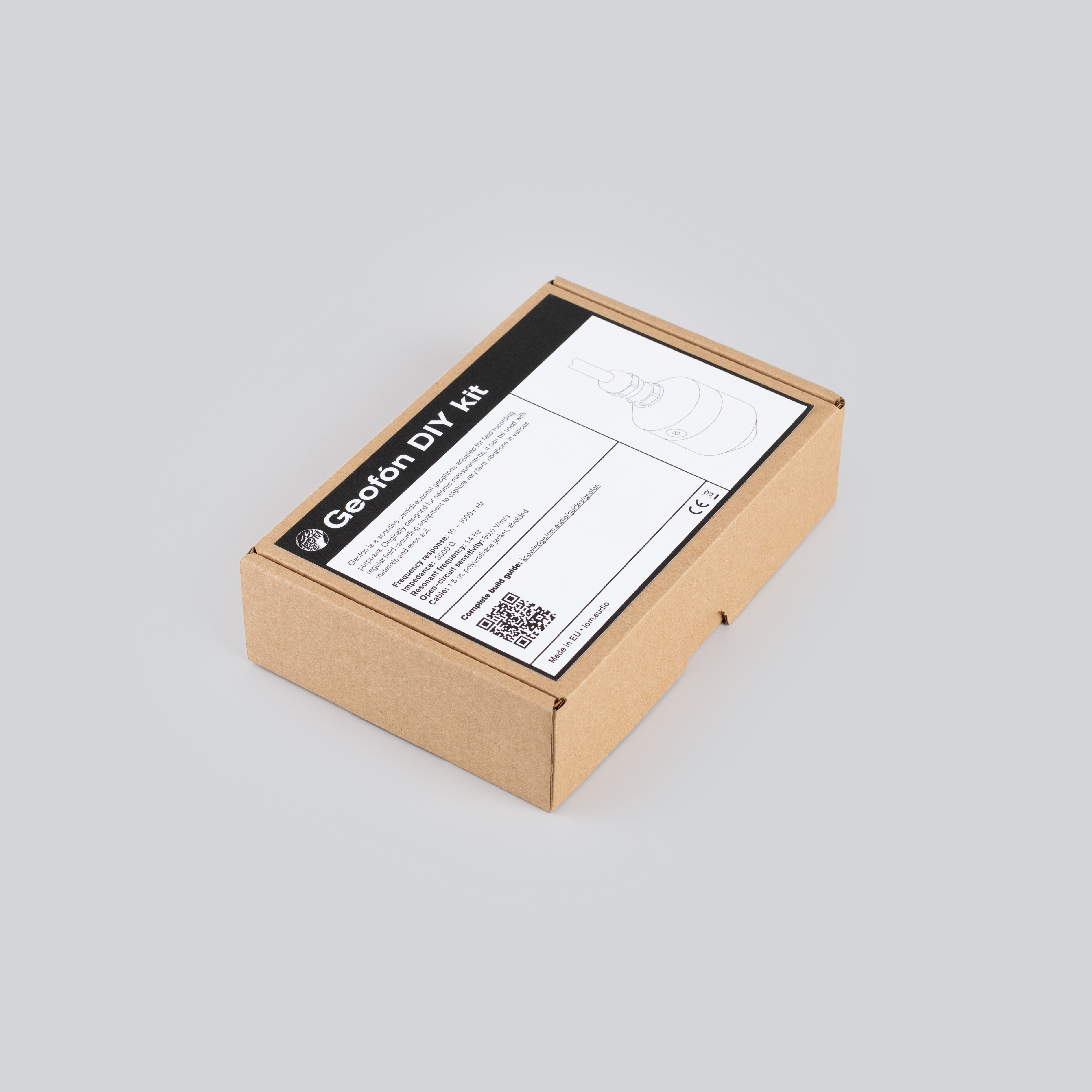
Geofón DIY kit
Build-it-yourself contact geophone · XLR balanced
The same Geofón, supplied as a kit you assemble yourself with a soldering iron and a few hand tools. It uses the identical geophone element and housing as the assembled Geofón, so the finished instrument performs the same — you just put it together (and learn how it works in the process). Soldering the element also lets you add the optional damping compensation during the build.
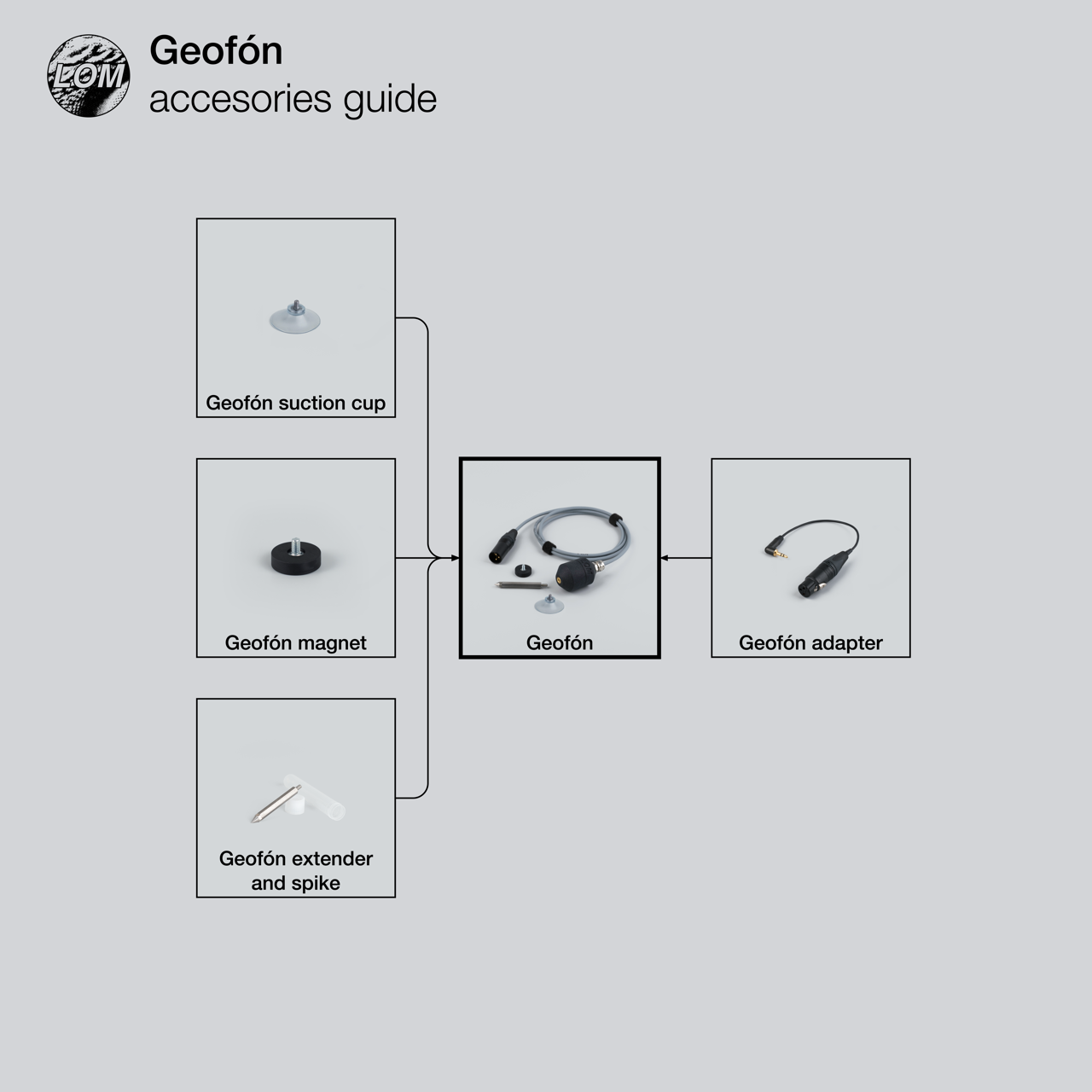
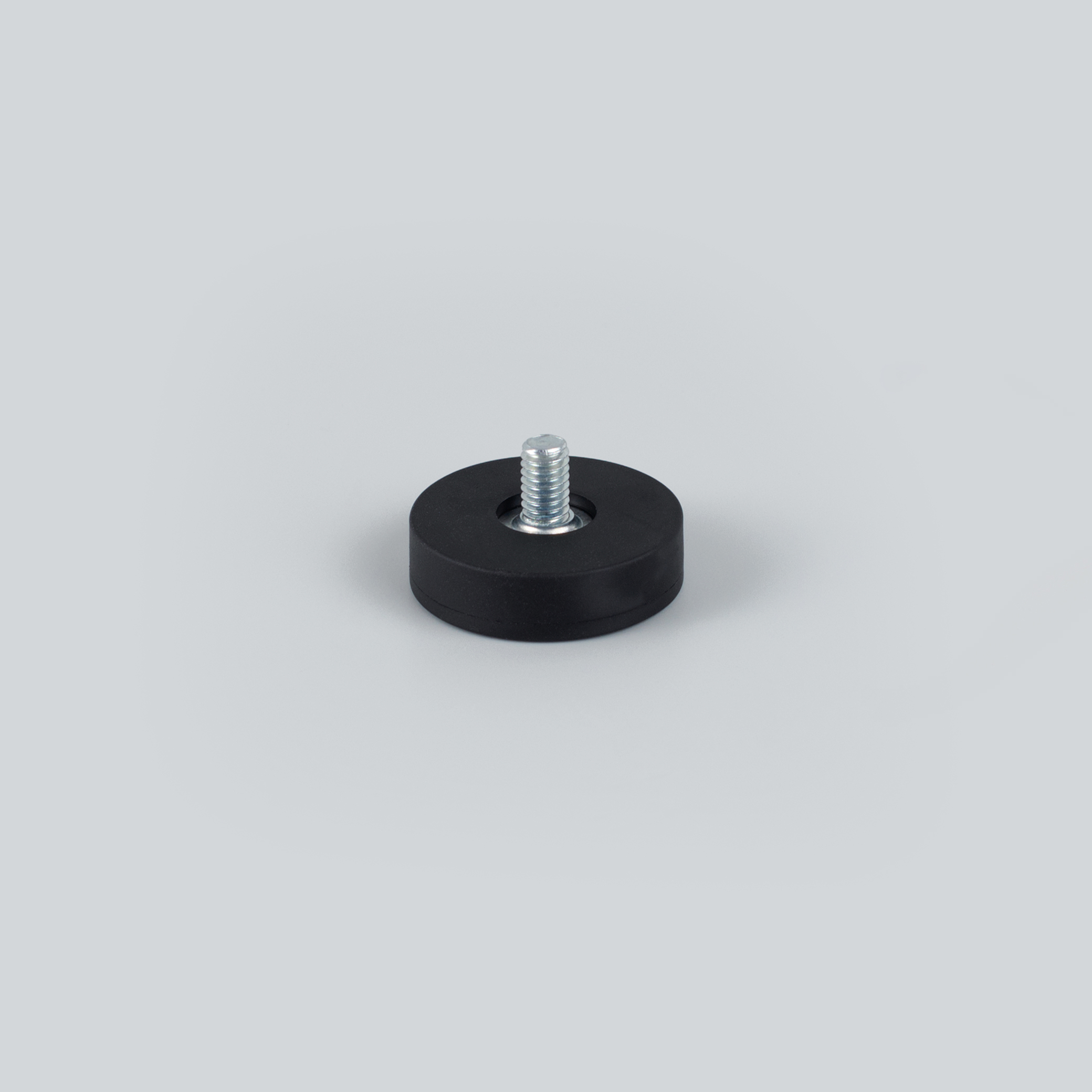
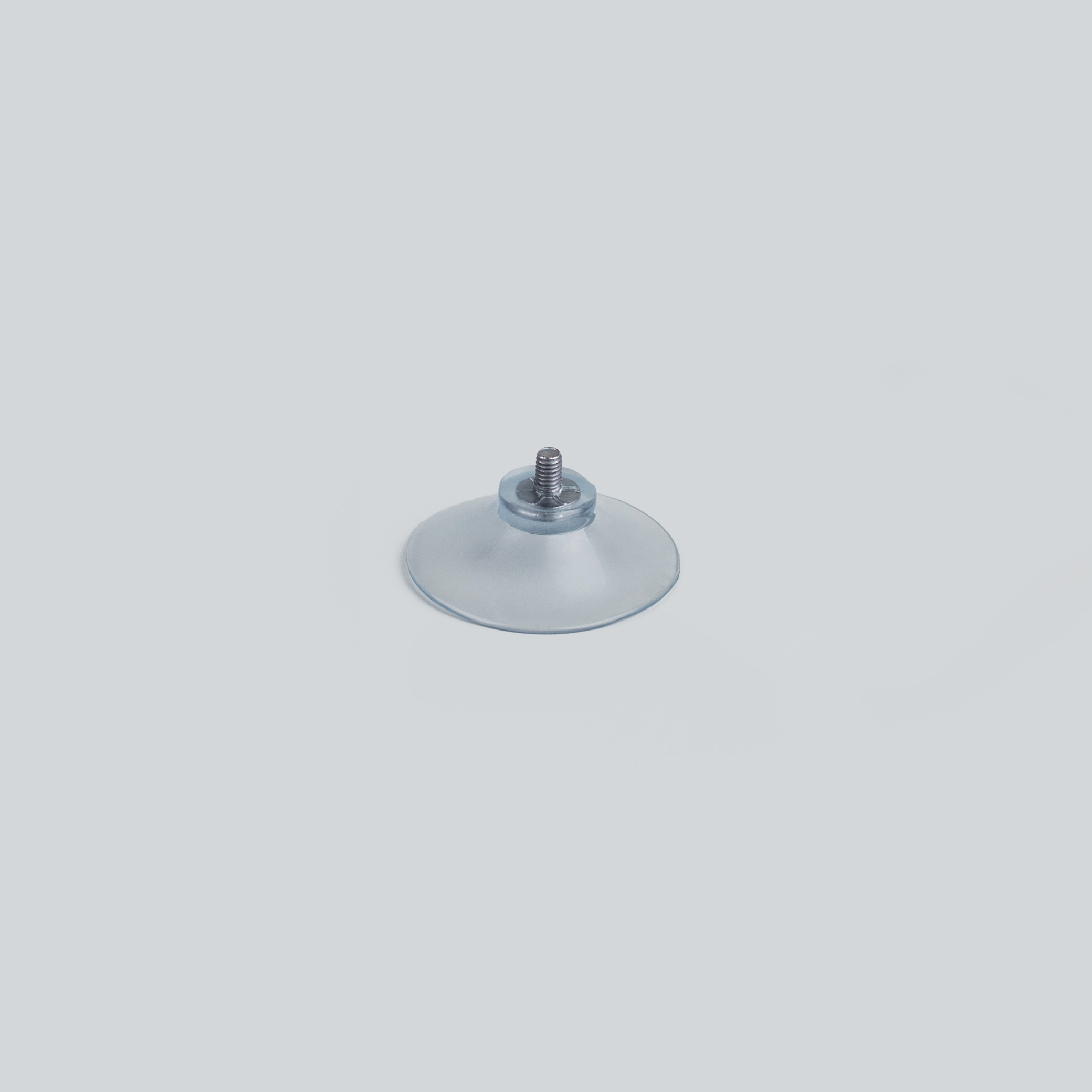
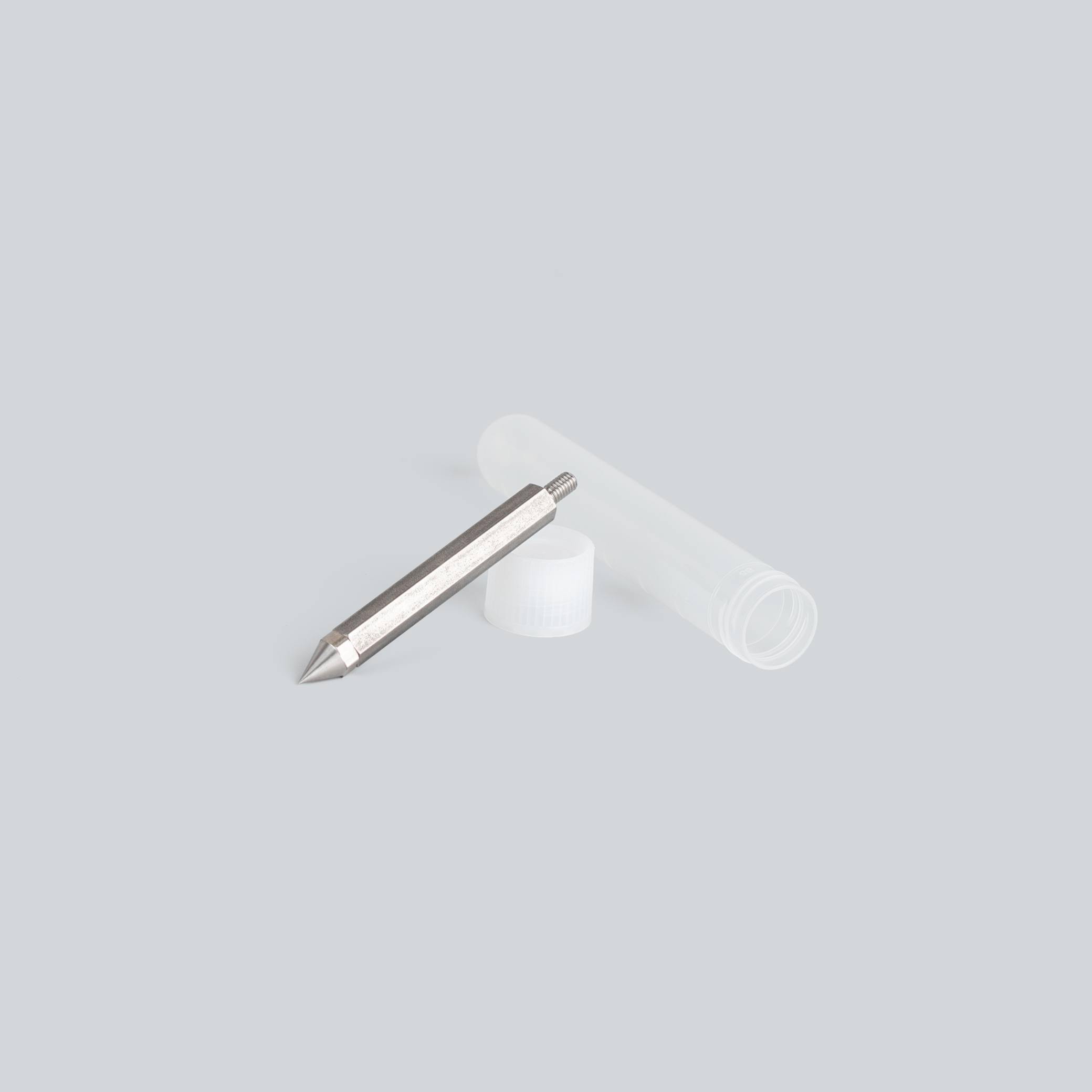
In the box: geophone element, two-part metal housing, Neutrik XLR-3M connector, cable, neodymium magnet (M4), suction cup (M4), extender and spike
You'll need: soldering iron, solder, small screwdriver/pliers
- Identical element and performance to the assembled Geofón
- User-assembled — no special tools beyond a soldering iron
- Optional damping compensation can be added during the build
- Fully user-serviceable and disassemblable afterwards
- Includes magnet, suction cup, and extender/spike mounts
| Parameter | Value |
|---|---|
| Type | Omnidirectional geophone |
| Open-circuit sensitivity | 88 V/(m/s) |
| Natural frequency | 20 Hz |
| Coil DC resistance | 3500 Ω |
| Recommended recorder input impedance | 2 kΩ (for flat response; higher values can be compensated — see damping compensation) |
| Spurious frequency | > 400 Hz |
| Usable frequency range | 20 Hz – 1 kHz (12 dB/oct rolloff below 20 Hz; diminishing fidelity above 400 Hz) |
| Output | XLR-3M balanced gold-plated Neutrik |
| Dimensions | 52.5 mm × ⌀36.5 mm |
| Weight | 192 g (with cable and magnet) |
Follow the step-by-step Geofón DIY assembly guide. If you want flat response on a higher-impedance recorder, read the damping compensation tutorial before you solder the element — it's easiest to add the resistor during the build.