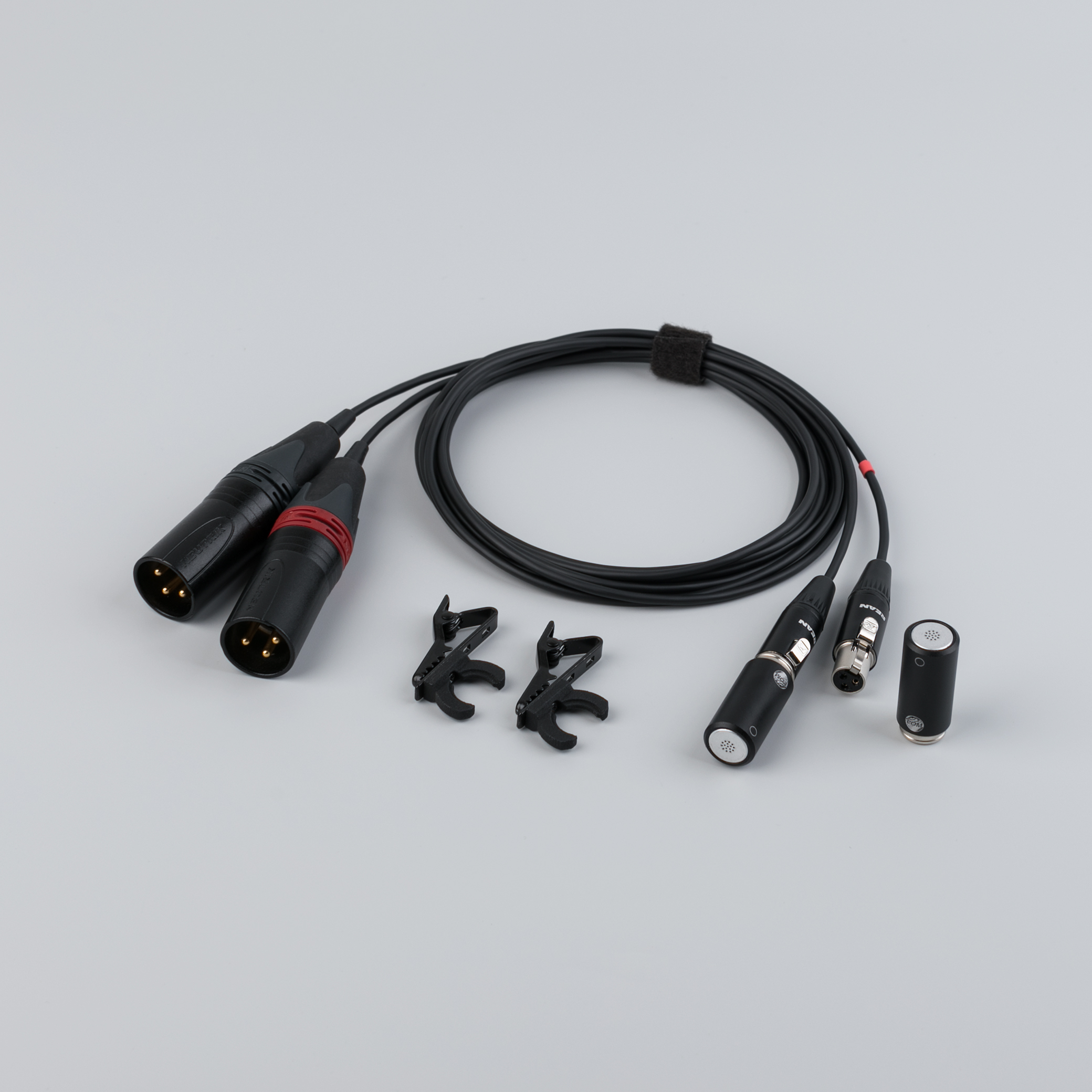
Uši Pro
- Stereo-matched pair with consistent response
- Phantom powered (24–48 V)
- Balanced transformer-less XLR output
- Compact ⌀13 mm capsule for discreet placement
- Exceptionally low self-noise (~14 dBA)
- Low output impedance (30–50 Ω)
- Modular cable system
| Parameter | Value |
|---|---|
| Transduction principle | Pre-polarized condenser (electret) |
| Directional characteristic | Omnidirectional |
| Sensitivity (free field, 1 kHz) | −18 dB re 1 V/Pa (≈126 mV/Pa) at 1 kHz, ±3 dB |
| Channel matching (matched pair) | < 0.5 dB at 1 kHz |
| Equivalent noise level (A-weighted) | ~14 dBA |
| Maximum input SPL | ~122 dB |
| Power supply | 24–48 V phantom (IEC 61938) |
| Current consumption | ~3 mA per pin |
| Rated output impedance | 30–50 Ω |
| Minimum load impedance | 1 kΩ |
| Output connector | XLR-3M |
| Output type | Balanced transformer-less floating |
| Dimensions | 26.2 mm × ⌀13 mm |
| Weight | 126 g (2 × 8 g capsules + 110 g cable) |
| Cable length | 1.5 m per microphone |
| Cable diameter | 2.5 mm |
| Operating temperature | −10 °C to +55 °C |
| Storage temperature | −25 °C to +70 °C |
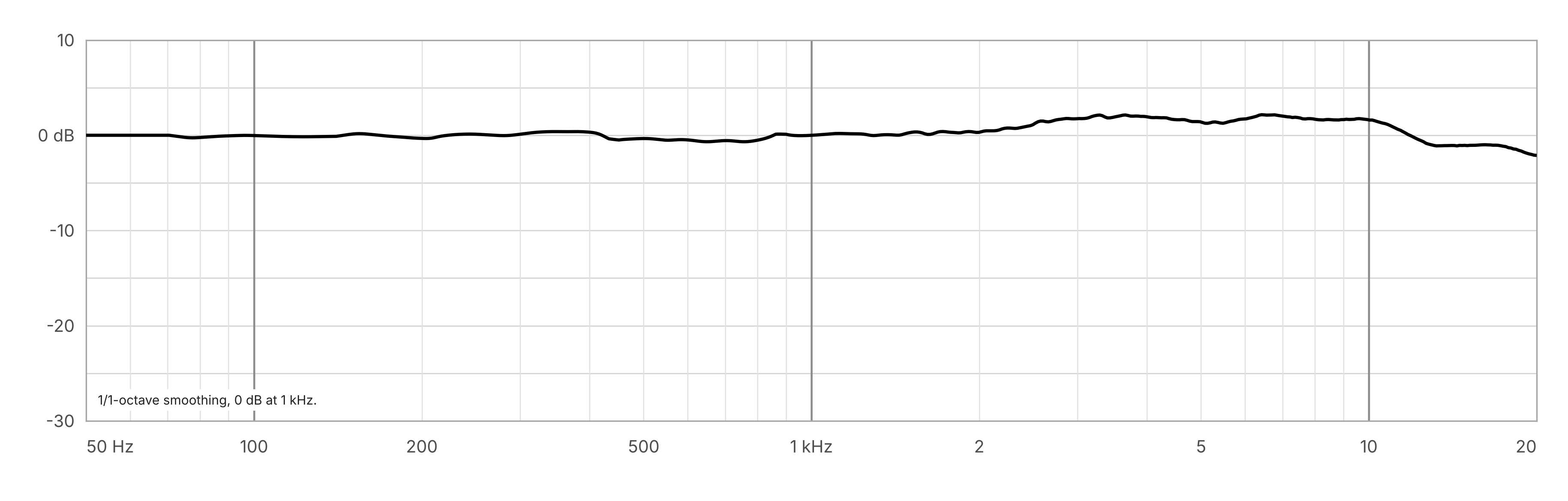
1/1-octave smoothing, normalised to 0 dB at 1 kHz. Uši, Uši Pro and Ucho Pro use the same capsule, so this curve applies to all three.
Read this before first use
- Never open or disassemble the microphone. There are no user-serviceable parts inside, and opening it voids the warranty.
- Protect the microphone from water and moisture. It is not waterproof. If it gets damp, let it dry fully at room temperature before using it again.
- Keep dust out. Store the microphones in a closed case or pouch when not in use — dust combined with humidity can cause crackling noises that require factory cleaning.
- Mind the temperature. Operate only between −10 °C and +55 °C, and don't leave the microphone in direct sun or a parked car.
- Protect your hearing. When monitoring on headphones, start at low volume and raise it gradually — unexpected loud sounds can occur at high gain.
Use only LOM cables
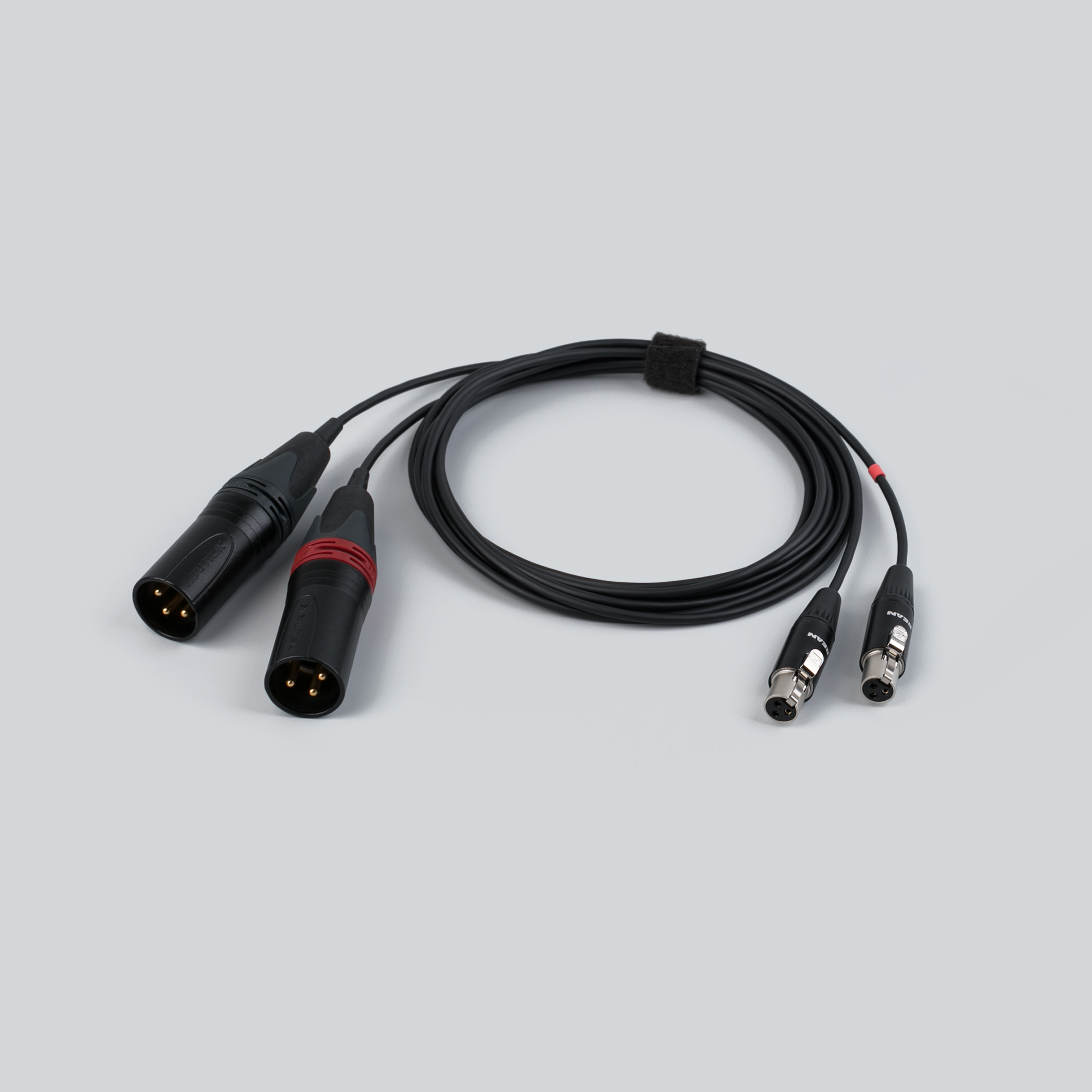
Never use third-party mini-XLR cables with Uši Pro. The Uši Pro (XLR) cable contains circuitry that converts phantom power to the voltage the capsules expect — connecting a plain cable while phantom power is on may permanently damage the microphones, and such damage is not covered by the warranty.
Will it work with my recorder?
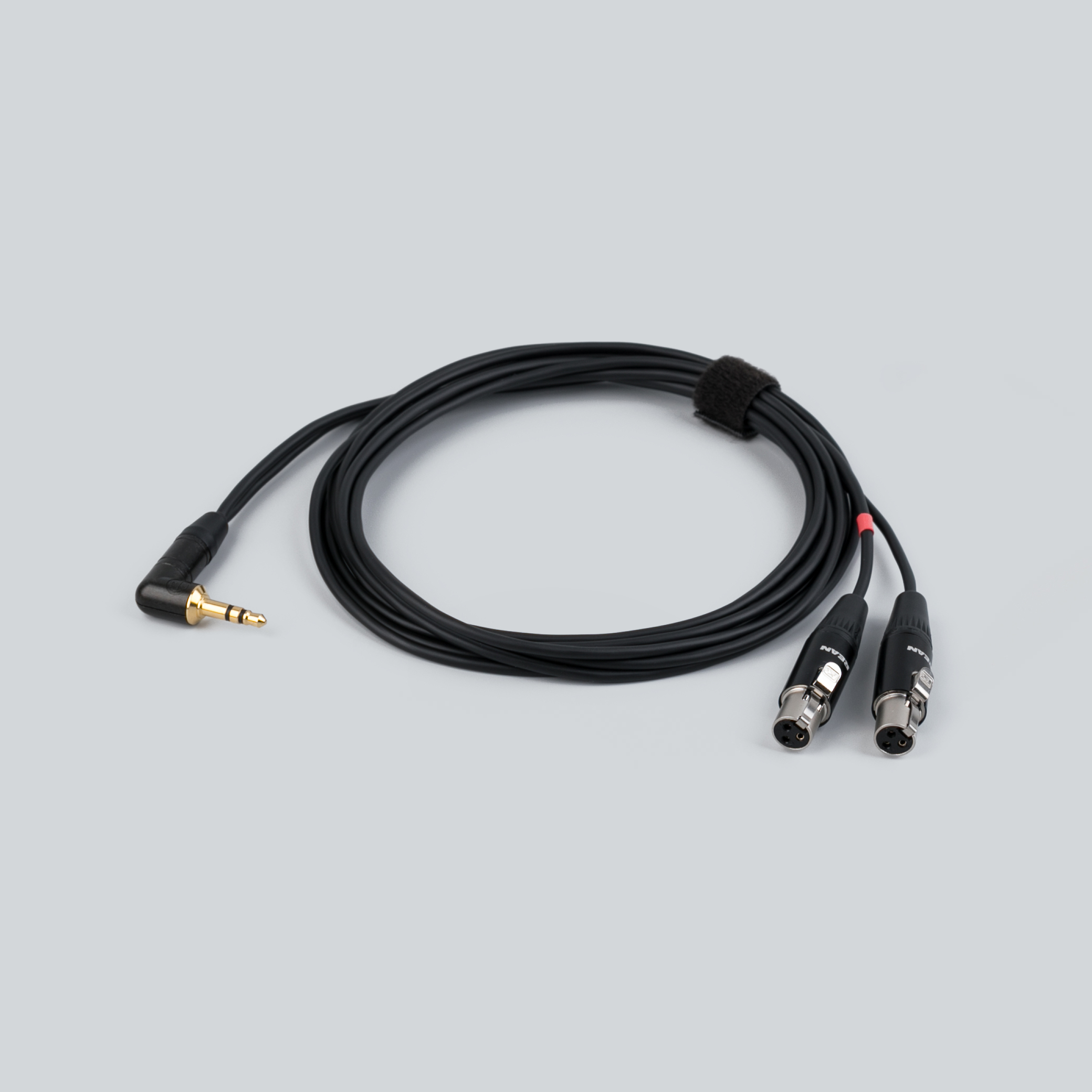
Uši Pro needs two XLR microphone inputs with phantom power (24–48 V, IEC 61938). Any recorder or preamp with standard 48 V phantom works; if yours has a 24 V mode, it saves battery with identical performance. Each microphone draws ~3 mA. If you only have a 3.5 mm plug-in-power recorder, the capsules also work with the Uši (minijack) cable.
Quick start
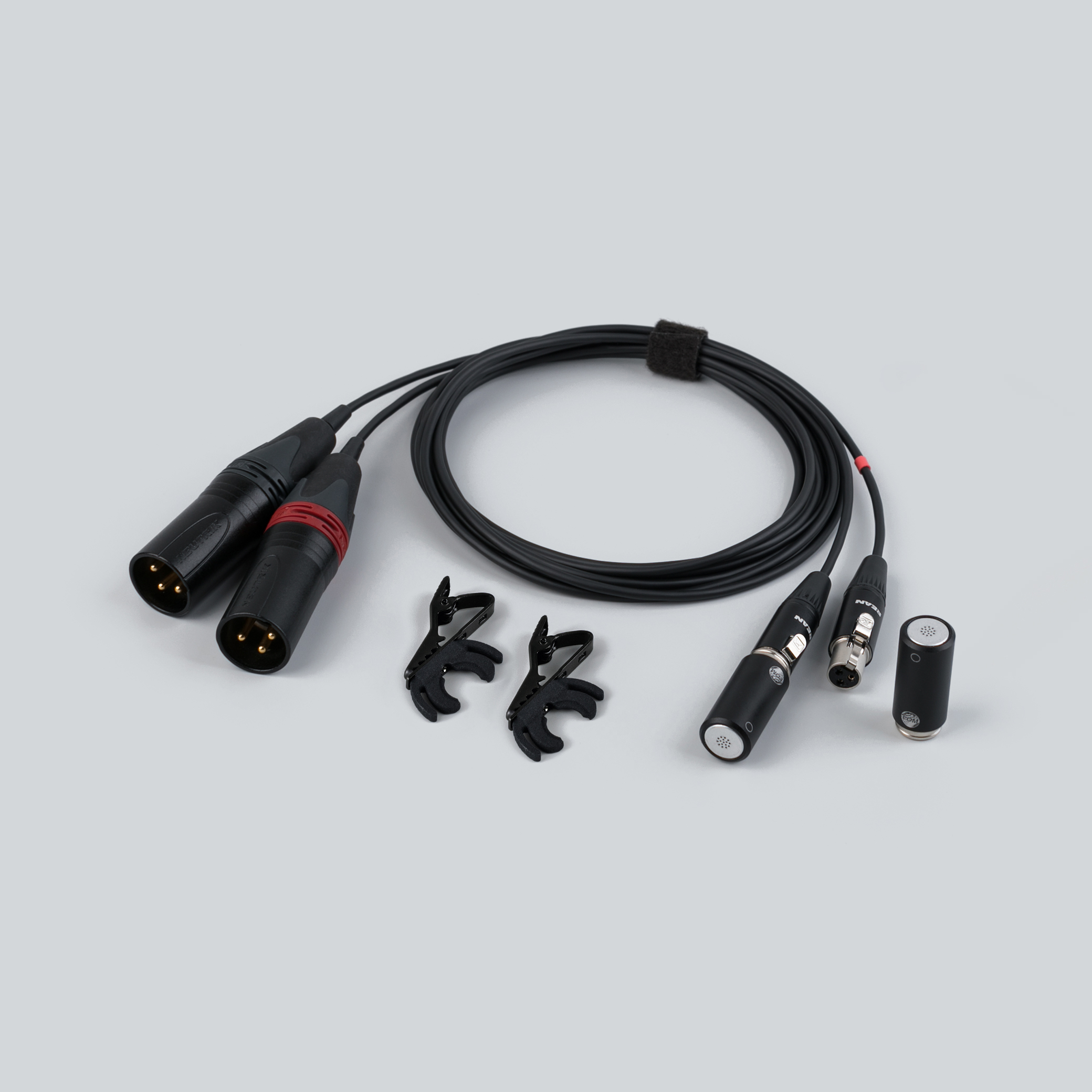
- Connect each microphone to the Uši Pro (XLR) cable — push the mini-XLR connector on until it clicks.
- Plug both XLR connectors into your recorder's mic inputs. The connector with the red ring is the right channel — keep it in the right input.
- Turn on phantom power (usually labeled 48 V) — on some recorders this is a switch, on others a menu setting. Check your recorder's manual.
- Put on headphones and set the gain: start low, then raise it until the loudest sounds you expect peak around −12 dB. Gently rub a finger near each capsule to confirm both channels are live.
- Make a short test recording and listen back before the real take.
Positioning the pair
For a natural stereo image, space the capsules roughly head-width apart (15–20 cm), or clip them to your shoulders or hat brim for a wearable, binaural-style rig. See more mounting ideas.
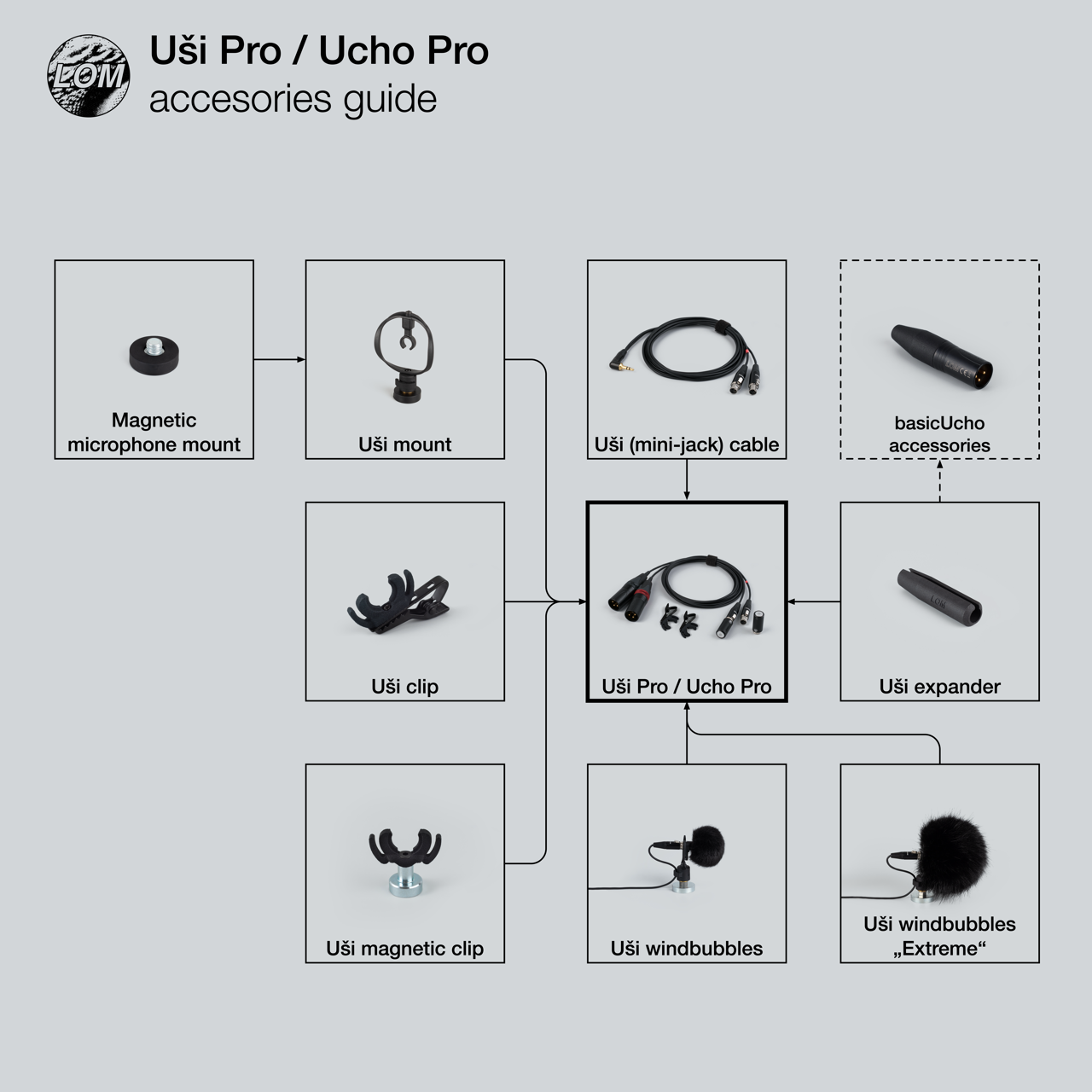
Using the included Uši clip
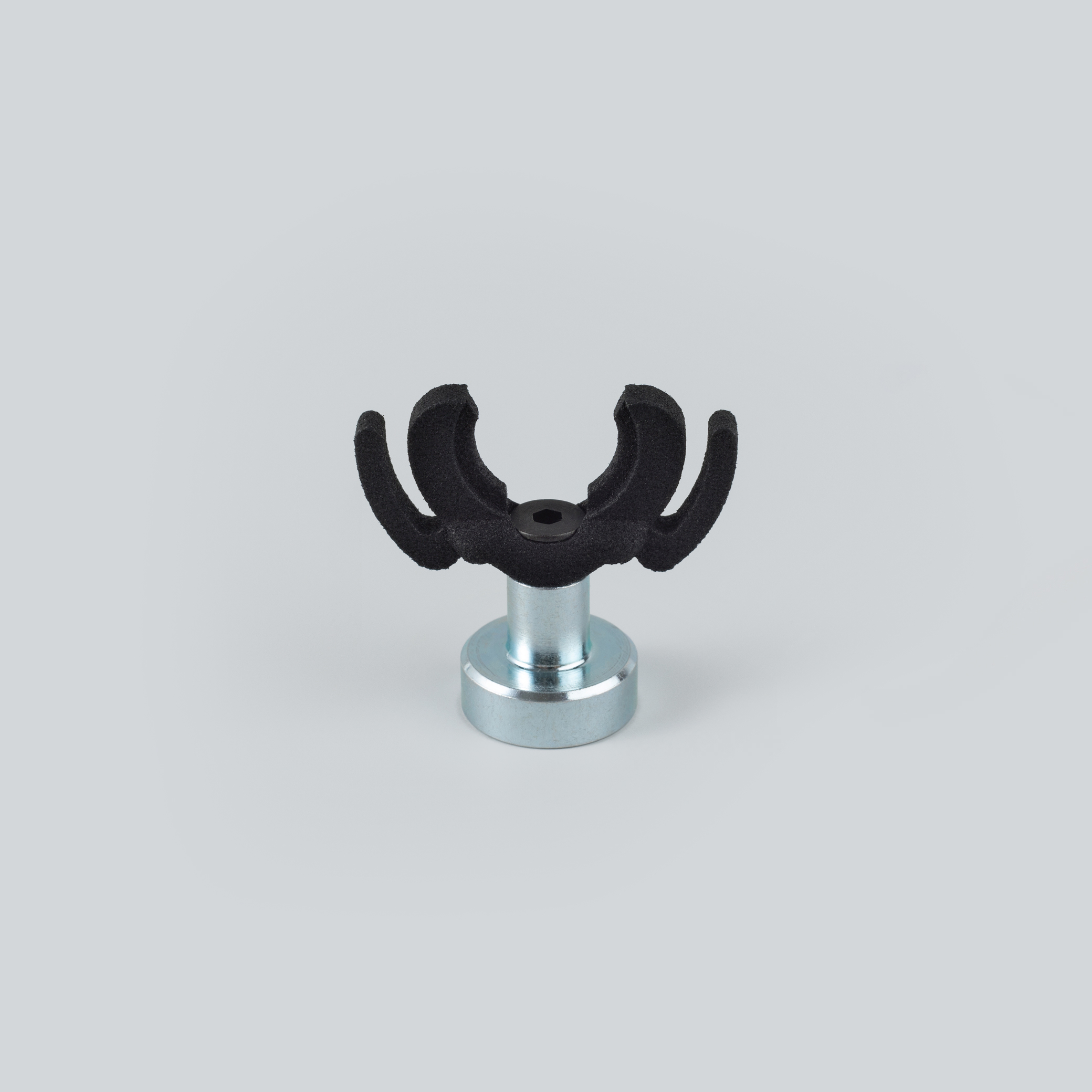
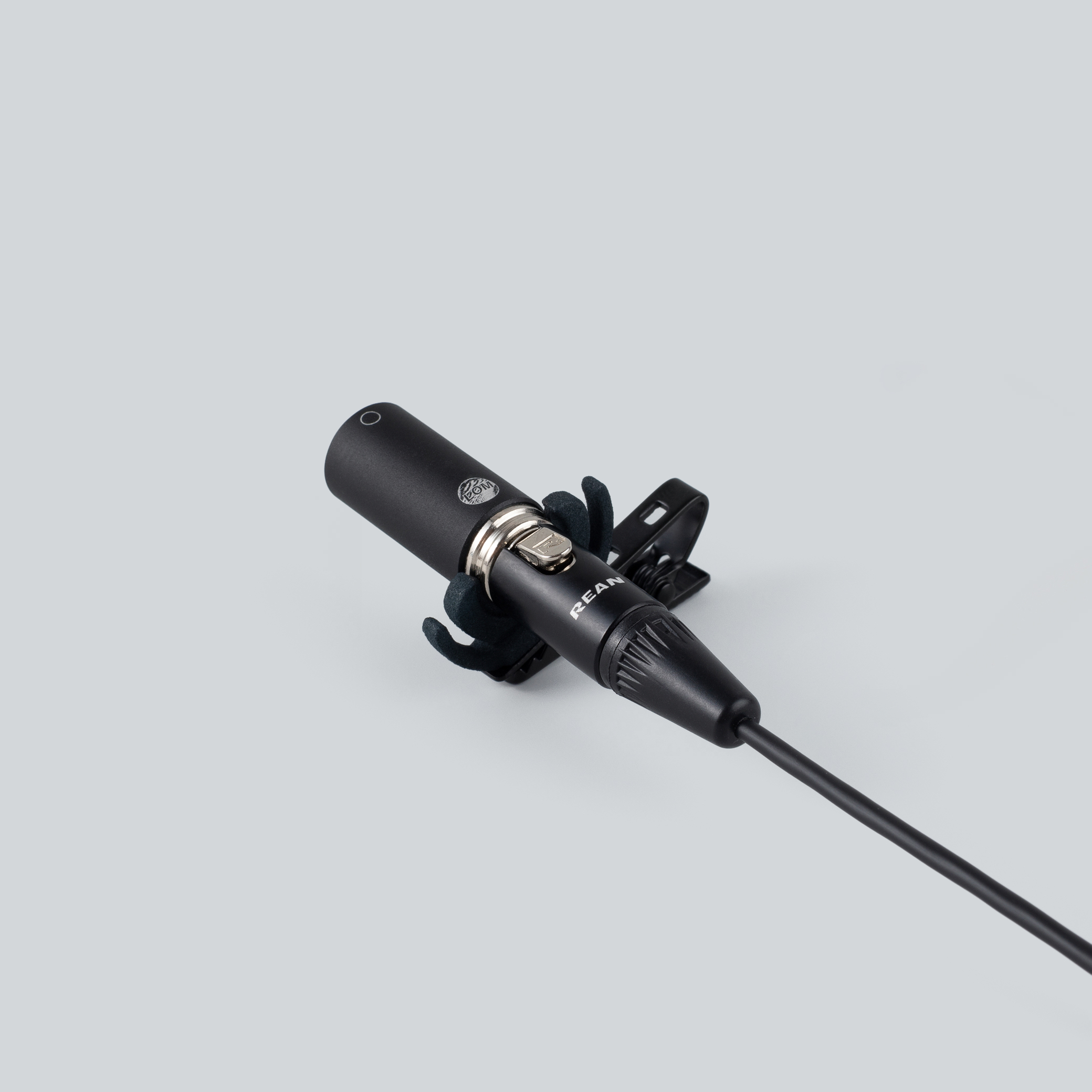
Snap the clip onto the silver groove on the microphone body, then attach it to clothing, a strap, or a stand. See more mounting ideas.
Using the wind protection — Uši windbubbles (optional accessory)
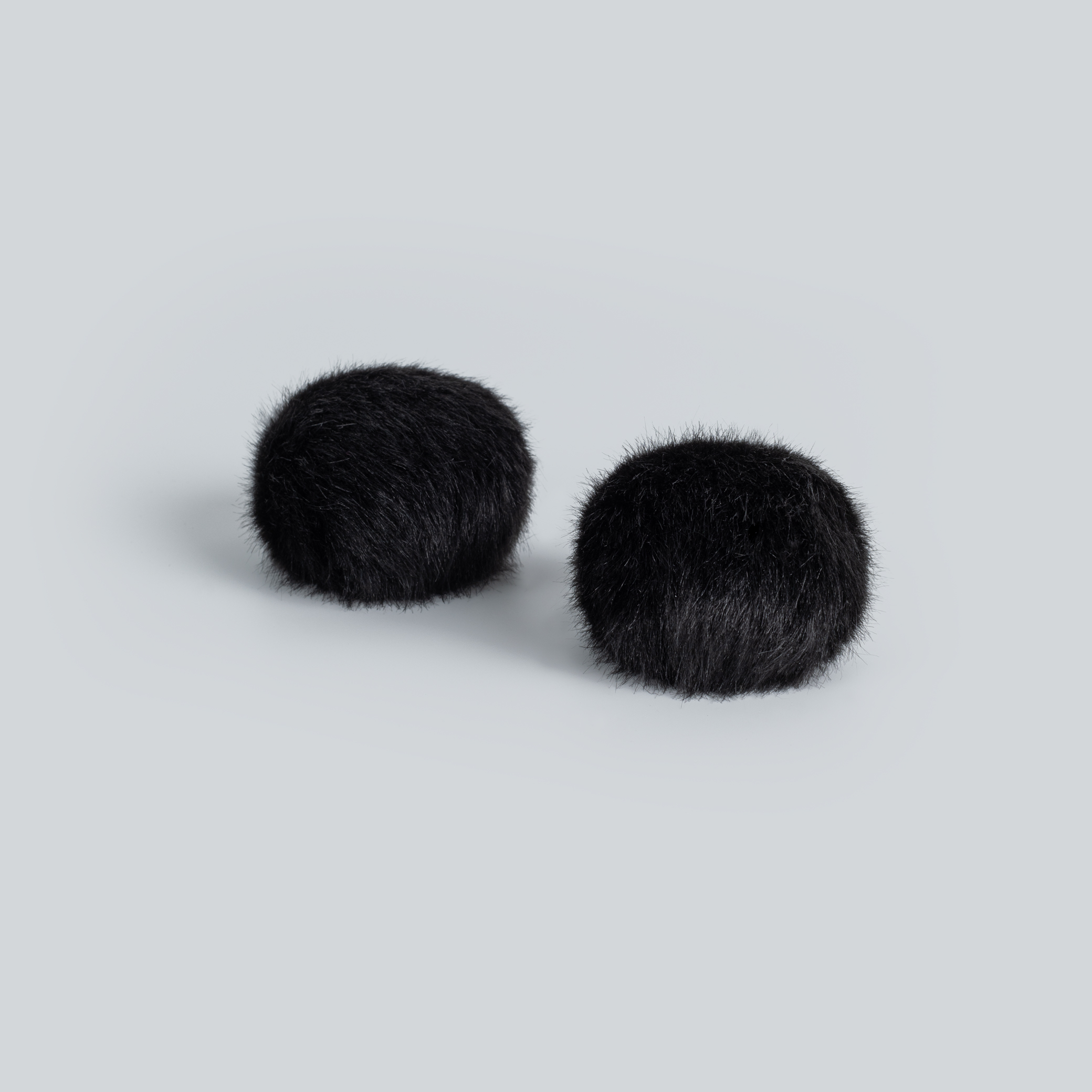
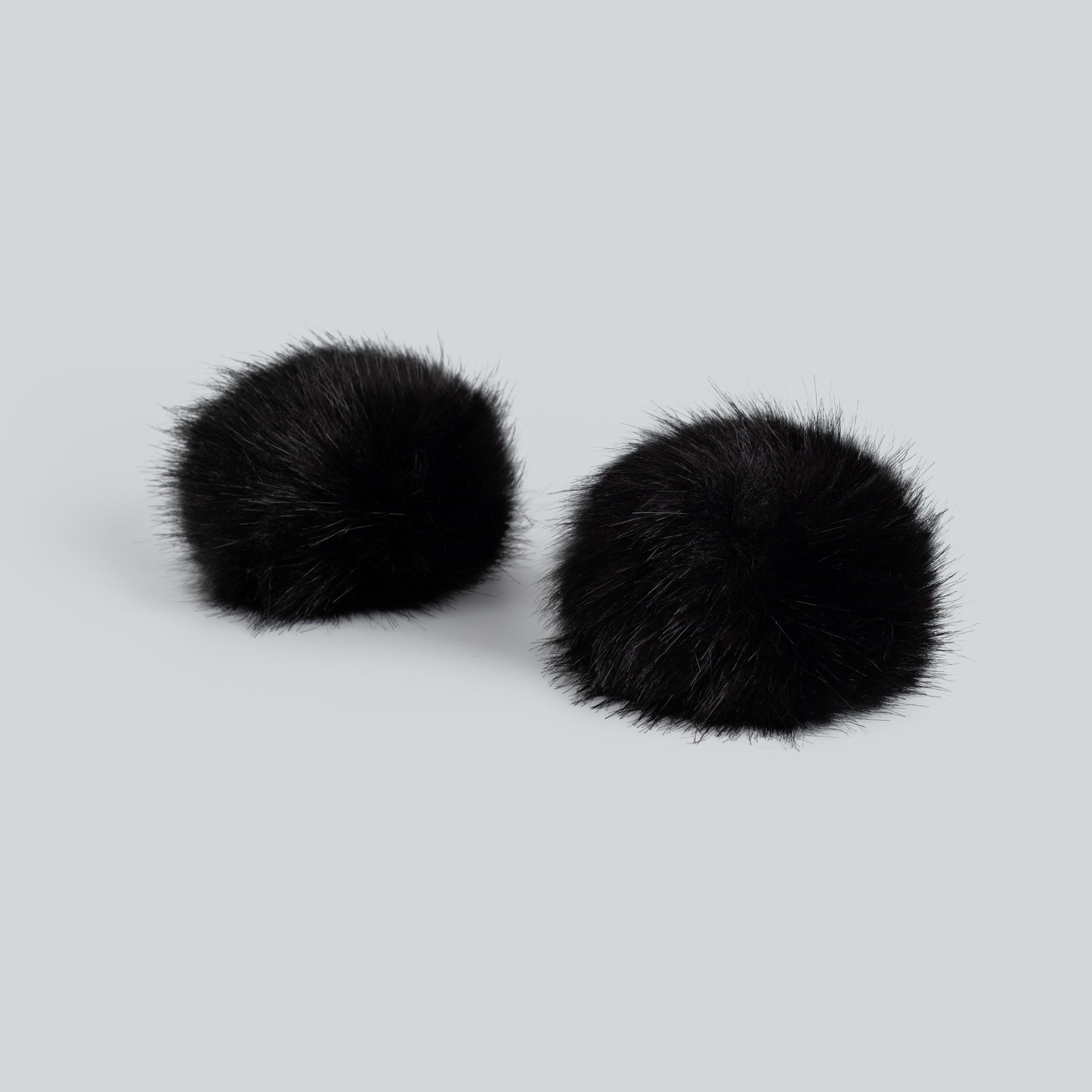
For outdoor recording, slip a windbubble over each capsule to reduce wind noise. Match the size to the microphone — see recommended wind protection. For extreme winds, we recommend the "Extreme" version of Uši windbubbles.
Using the Uši mount (optional accessory)
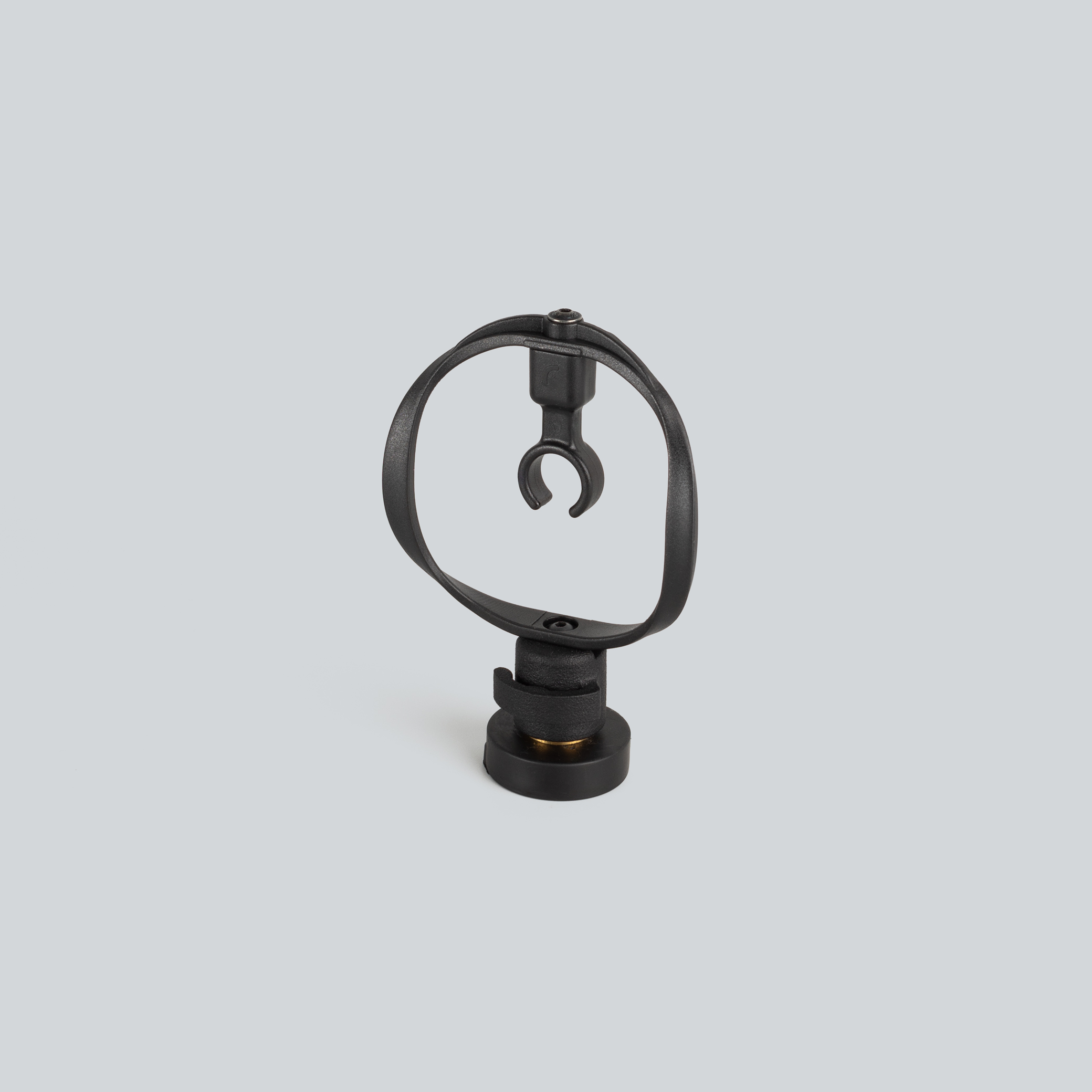
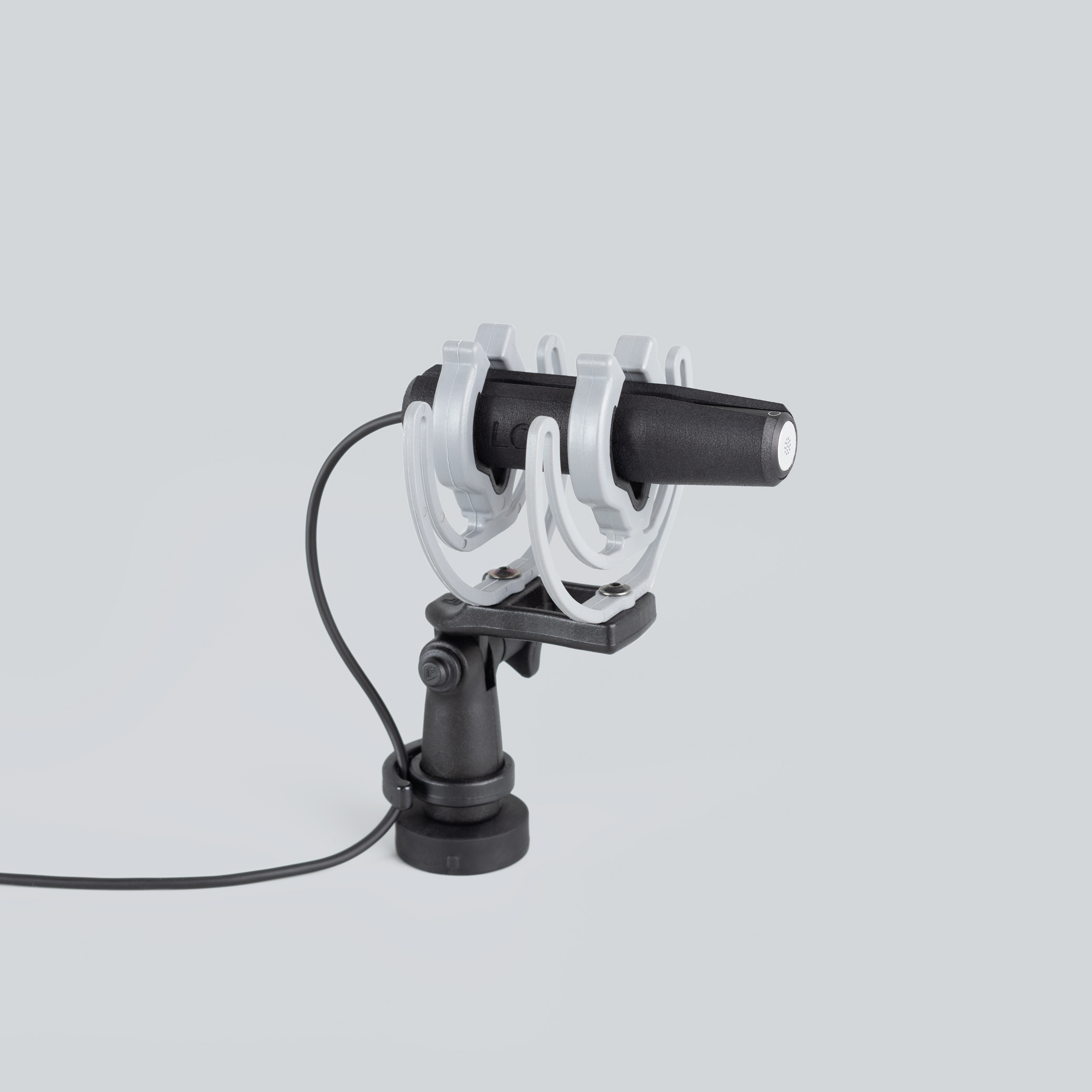
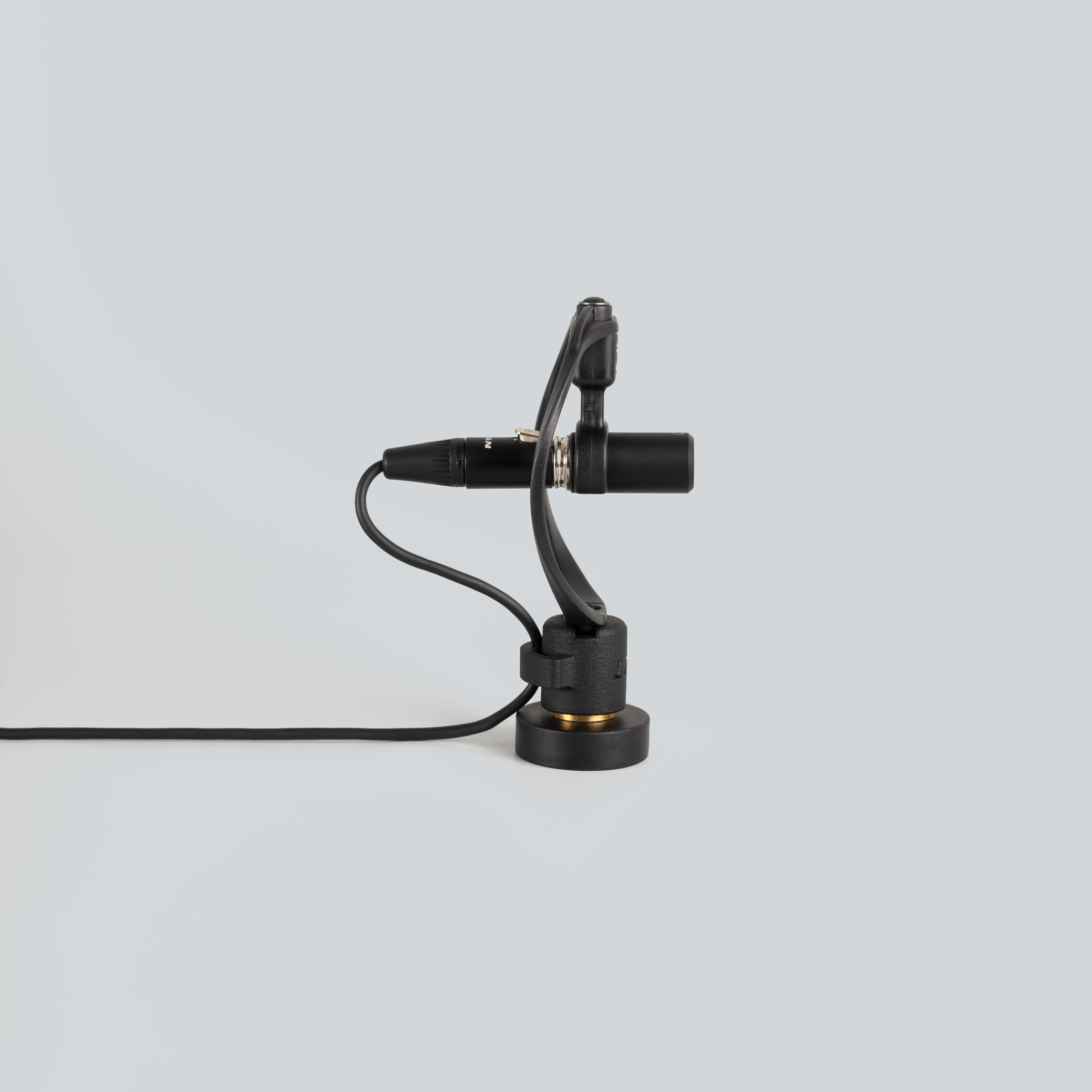
Seat the microphone in the lyre of the Uši mount for suspension that isolates it from handling and stand-borne vibration.
Swapping cables
The system is fully modular: Uši Pro capsules also work with the Uši (minijack) cable, and standard Uši capsules work with this XLR cable — just swap. Use only LOM cables (see the safety notes above).
Disconnecting the capsules from the cable
Press the button on the mini-XLR connector and pull the capsule straight off. If you can't get the connector off, try this.
Uši Pro is at home wherever quiet sources meet professional gear: nature ambiences and quiet field recording (the ~14 dBA self-noise keeps hiss out of silent scenes), discreet urban and documentary stereo, wearable binaural-style rigs, sound-art installations, and unattended drop rigs. The capsules respond far beyond the audible range (up to ~80 kHz), so with a high-sample-rate recorder they also work for recording ultrasound. Sources louder than ~122 dB SPL (concerts next to the PA, very close machinery) will overload the capsule — see the comparison table if you record extremes.
Storage. Keep the microphones in a closed case or pouch, away from dust and humidity. Coil the cables loosely — sharp bends shorten their life.
Cleaning. Wipe the body with a dry or slightly damp cloth. Never use solvents or compressed air, and never poke anything into the capsule openings. If a connector gets dirty, wipe the contacts with a dry cloth.
Condensation. When you bring the microphones from cold outdoor air into a warm room, moisture can condense inside the capsules and cause crackling or popping sounds. This is not a fault — let them acclimatize for 30–60 minutes and the noise will disappear on its own. If crackling persists in normal conditions, contact us rather than attempting to clean the capsule yourself.
Dusty or dirty environments. Use wind protection even indoors when recording in dusty places — it keeps particles out of the capsule.
- No sound, or a very quiet signal → is phantom power actually on, and on the right inputs? See no signal.
- Only one channel records → check both mini-XLR connectors are clicked in and the recorder isn't set to mono. See one channel silent.
- Crackling or popping → most often condensation after a temperature change. See crackling and popping.
- Distortion on loud sources → lower the gain; above ~122 dB SPL the capsule itself overloads. See distortion.
- Hum or buzz → almost always a cable or powering issue. See hum and buzz.
- The cable won't come off → don't force it — see the technique.
Manual PDF download coming soon
Warranty. LOM products are covered by a two-year guarantee beginning on the date of purchase. Keep your proof of purchase — it is required for any claim. Within the guarantee period we will, at our discretion, repair or replace products with defects in materials or workmanship. The guarantee does not cover damage caused by misuse, mechanical damage, moisture, unauthorized modification, or use with third-party cables or power sources outside the published specifications. Destructive opening of certain parts of the product voids the warranty.
Repairs. Before sending anything back, contact us with a description of the problem and your proof of purchase — many issues can be resolved without shipping.
Declaration of conformity. This product complies with the applicable European directives, including EMC Directive 2014/30/EU, when used with cables and accessories supplied by LOM.
Disposal. Do not dispose of the product in household waste. Like all electrical and electronic equipment, it must be handed in at a WEEE collection point at the end of its life.
Manufacturer: LOM s.r.o., Jelenia 10, 811 05 Bratislava, Slovakia · store.lom.audio